The name
Why "Cheat"?
Three stories explain the name of the river and the mountain. None of them has documents behind it. Here is what is actually on record, and what is repeated without it.
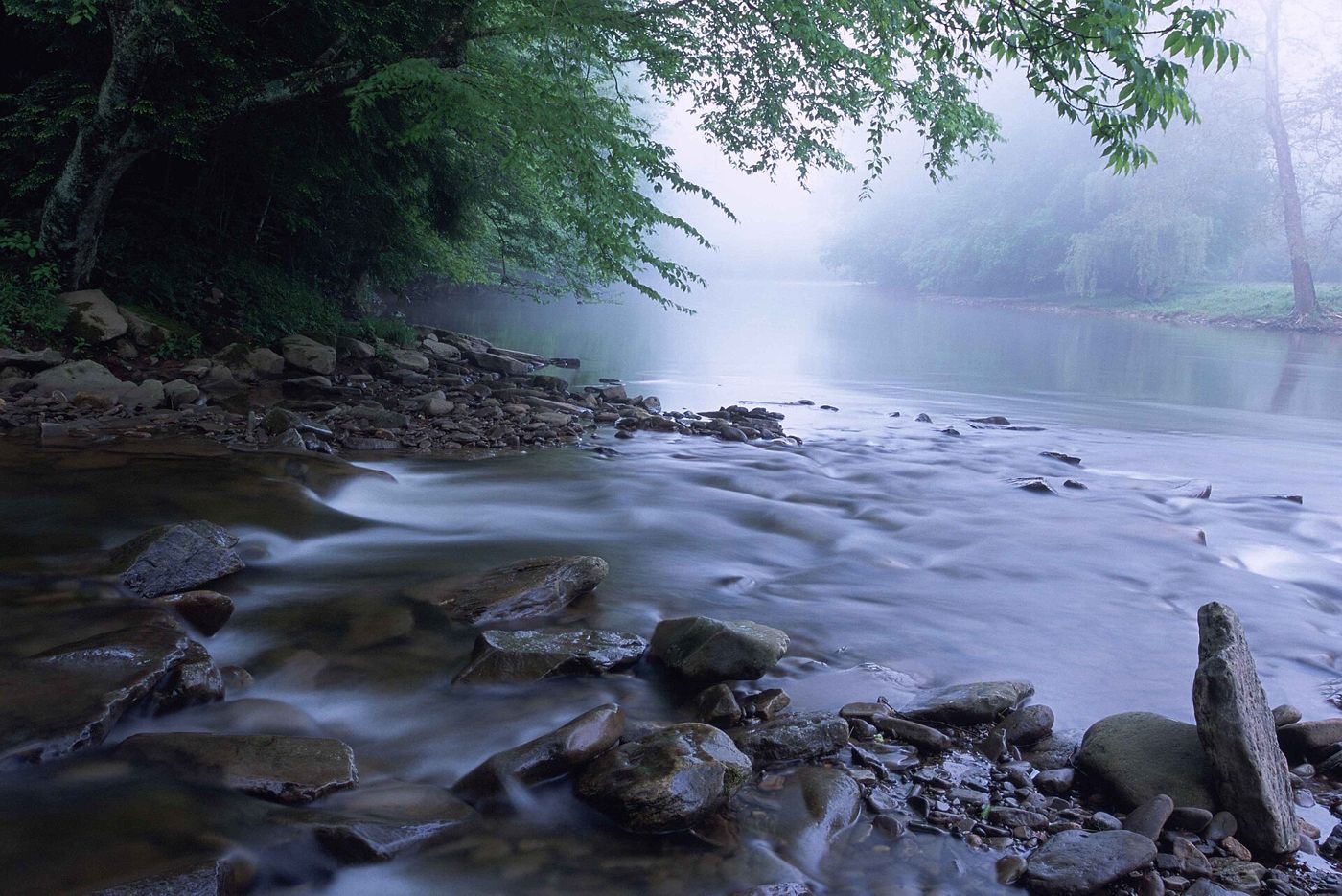
The mountain takes its name from the river, and no documented origin for the river's name exists. There are theories, and "none of these theories have strong documentary support."1
What is on record
The documented facts are few. The Geographic Names Information System, the federal government's official gazetteer, records several earlier or variant names for the river: Ach-sin-ha-nac, Achsinhanac, Cheal River, Chealt River, Eleat River and Wilmoths River.1 The first two are versions of the Delaware (Lenape) name, reportedly "meaning 'stony river'." The original source for that translation has not been traced, and the "reportedly" matters.
"Wilmoths River" points to a settler family. "Cheal," "Chealt" and "Eleat" look like spelling variants or copying errors in early maps and deeds.
The three stories
Three explanations are "variously reported."1
1. A person named Cheat
The river was named for a French explorer, or in some versions a Native American man, called Cheat or Chaet. No one has produced a record of this person.
2. Cheat grass
The banks were thick with "cheat grass," a name farmers used for weedy grasses in grain fields. There is a twist: the plant may have been a misidentification of frost-killed wheat. This explanation at least ties the name to a real word in use among settlers. There is no record of who first used it for the river.
3. The river cheated men of their lives
The deep pools and whirlpools of the Cheat "cheated" men by drowning them. This is the most often cited version, and the one Snowshoe tells: the river "has cheated many a man of his life," and "the same was true for Cheat Mountain logging."13
A barrier, not an answer
The mountain was "a formidable barrier to the westward movement of early settlers," and that much is well recorded.4 How it came by its name is not, in the state's encyclopedia or anywhere else in print.
The mountain's other names
Parts of the ridge carry their own names, and these are better documented. White Top, the knob that held the Union fort in 1861, was also called Cheat Summit.5 Thorny Flat, the high point near the resort, has carried that name in every modern reference.67 Bald Knob, often mistaken for part of Cheat, belongs to Back Allegheny Mountain.8
Our approach
The accurate answer to "why Cheat?" is that nobody knows, and the most quoted answer is a story.
Sources
- Wikipedia, "Cheat River" (CC BY-SA)
- Wikipedia, "Battle of Cheat Mountain" (CC BY-SA)
- Snowshoe Blog, "Snowshoe Slope Name Origins" (Jacy Bishoff, Dec. 11, 2021)
- e-WV: The West Virginia Encyclopedia, "Cheat Mountain"
- Wikipedia, "Cheat Mountain" (CC BY-SA)
- Wikipedia, "Thorny Flat" (CC BY-SA)
- Wikipedia, "Pocahontas County, West Virginia" (CC BY-SA)
- Wikipedia, "Bald Knob (West Virginia)" (CC BY-SA)
Published 2026-10-29. Corrections: see About.