Civil War, September 1861
The Battle of Cheat Mountain
Robert E. Lee's first campaign in the field rested on five columns striking two Union camps at once, three of them converging on a mountaintop fort in the rain. The signal never came. This is how it unfolded, day by day.
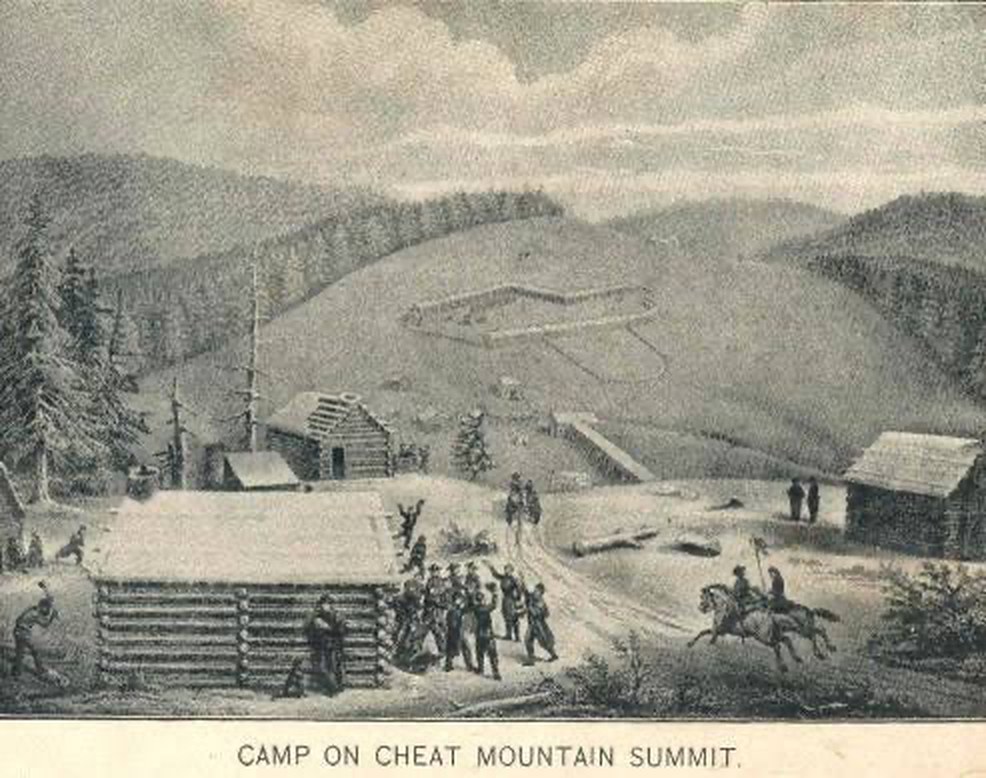
The Battle of Cheat Mountain was fought from September 12 to 15, 1861, around a Union fort on White Top, a knob of Cheat Mountain in Randolph County, and the Union camp at Elkwater in the Tygart Valley below it. Gen. Robert E. Lee sent five columns through the rain to surprise both posts. The attack on the fort that was to open the battle never came, and after four days of skirmishing in the woods Lee ordered his army back to its camps. It was a Union victory that cost the two sides about 208 men.12
Quick answers
- What happened at the Battle of Cheat Mountain?
- Lee planned a surprise attack on the Union fort atop Cheat Mountain and the camp at Elkwater for the morning of September 12, 1861. Col. Albert Rust, whose assault on the fort was to be the signal, decided the fort was too strong and withdrew without attacking. Skirmishing went on until September 15, and Lee then pulled back.23
- Who won?
- The Union. Neither army gained or lost ground, but Lee's offensive failed and western Virginia stayed in Union hands.13
- How many died?
- Ten Union soldiers were killed, out of 88 Union casualties counting wounded and captured. Union Gen. Joseph J. Reynolds reported nearly 100 Confederates killed and about 20 captured, the basis of the usual figure of 120 Confederate losses. Among the Confederate dead was Lt. Col. John A. Washington, Lee's aide.142
- Where is Cheat Summit Fort?
- On White Top, about 4,000 feet up, roughly a mile and a half from Cheat Bridge. It is in the Monongahela National Forest, reached by County Route 43/4 off U.S. 250.56
How the armies got there
By the late summer of 1861 the war in western Virginia was four months old and going badly for the Confederacy. Virginia's convention had voted to secede in April, and the counties west of the Alleghenies, tied by trade to Ohio and Pennsylvania, refused to follow. A Unionist convention at Wheeling named Francis H. Pierpont governor of a loyal Virginia and began the work that would make West Virginia a separate state.7
Maj. Gen. George B. McClellan crossed the Ohio River in May with regiments from Ohio, Indiana and the western counties, moving along the Baltimore and Ohio Railroad. His men scattered Confederate recruits at Philippi on June 3, a rout the Northern press called the "Philippi Races."8 On July 11 Brig. Gen. William Rosecrans took a brigade around the Confederate flank at Rich Mountain, and two days later Brig. Gen. Robert S. Garnett was killed at Corrick's Ford on the Cheat River, the first general officer to die in the war.910 The Confederates fell back over the Alleghenies. Ten days after Rich Mountain the Union army was routed at Bull Run, and McClellan, the one Union general with victories to show, was called east. Rosecrans took his place.7
Jefferson Davis sent Lee west to protect two railroads that fed Richmond, the Virginia Central and the Virginia and Tennessee, and to win back the lost ground.111 Lee was then a staff general with no field command of his own. He did not replace Brig. Gen. William W. Loring, who commanded the Army of the Northwest; he advised him and issued orders through him, a divided arrangement that left no one plainly in charge of the columns.13 Lee reached Loring at Huntersville on August 3 and spent the rest of the month waiting for Loring to bring his army forward and scouting the mountains himself.3
The fort on White Top
The Union post sat astride the Staunton and Parkersburg Turnpike, the main east to west road across this part of the Alleghenies and the line of today's U.S. 250. McClellan ordered a fort built where the pike crossed Cheat Mountain, to hold the road and cover the Baltimore and Ohio Railroad behind it. Brig. Gen. Robert H. Milroy's men began it in July 1861.56 At about 4,000 feet it was among the highest Union camps of the war. The soldiers called it Cheat Summit Fort, Fort Milroy, White Top, Camp McClellan and Fort Gilbert.1213
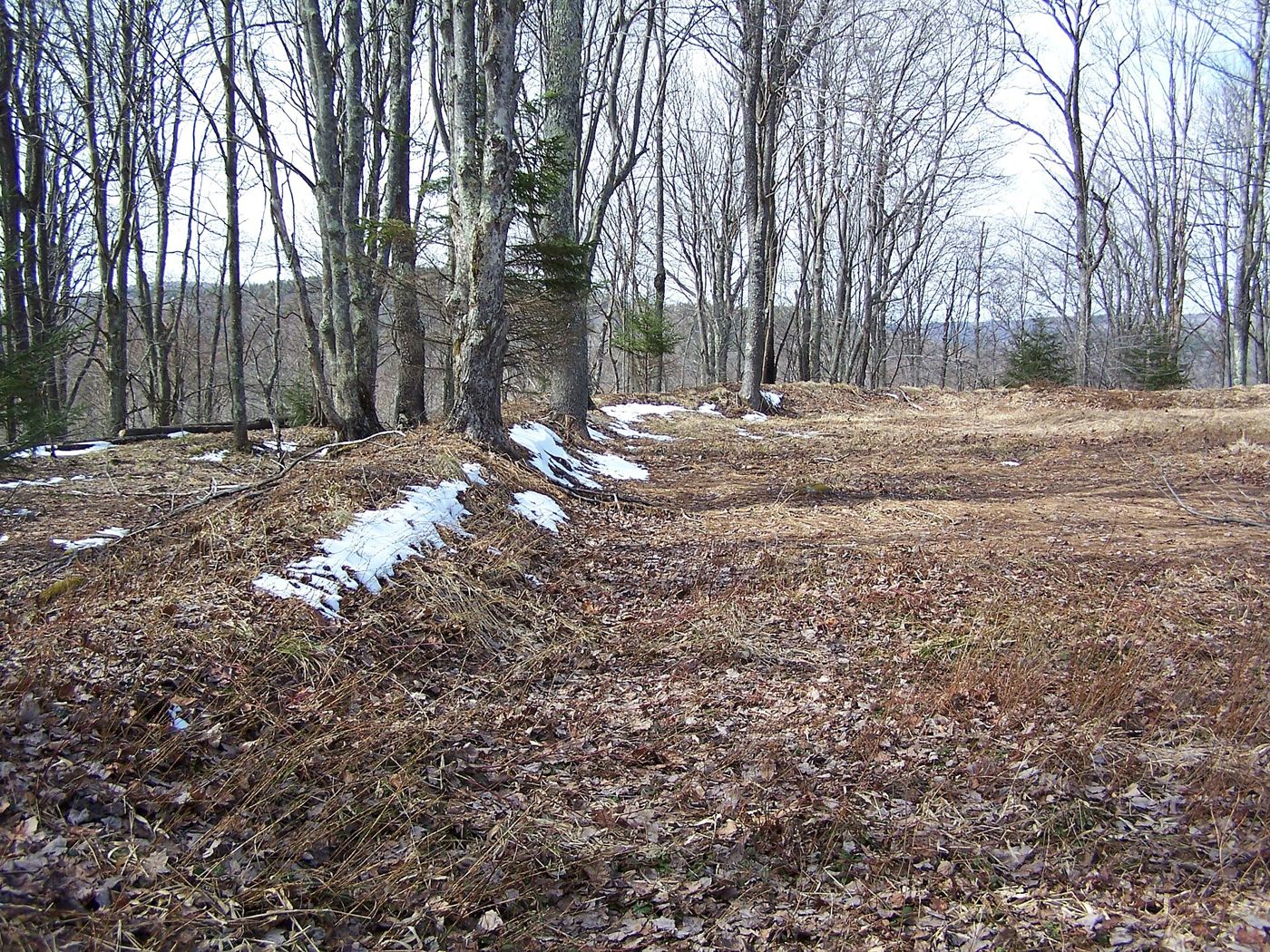
A Confederate correspondent who saw the works in September described them for Richmond readers. The garrison had cleared several acres on each side of the road and piled the felled pines around the edge, trimmed and skinned "with their tops outward," a barrier of sharpened points. Inside stood a log wall and a deep ditch, breastworks across the road with pivot guns, and a blockhouse armed with cannon.14 Earthen walls up to 14 feet high surrounded the camp.12
The weather was the garrison's other enemy. At Lee's camp on Valley Mountain, ice formed on the night of August 14. By mid-September Lee wrote that "it has been raining in these mountains for about six weeks."3 Measles spread through Loring's camps.3
The two armies
Brig. Gen. Joseph J. Reynolds commanded the Union troops in the Cheat Mountain district, roughly 5,000 men spread between the summit and Elkwater.12 His regiments came from Indiana, Ohio and loyal Virginia, with artillery that included Loomis' Michigan battery. Col. Nathan Kimball held the fort with his 14th Indiana, detachments of the 24th and 25th Ohio, and Daum's battery. Reynolds kept his headquarters at Camp Elkwater, with the 15th and 17th Indiana, the 3rd and 6th Ohio, the 2nd Virginia and Loomis' Michigan battery, and the 13th Indiana held Cheat Mountain Pass at the foot of the mountain. The fort and Elkwater were 7 miles apart by a bridle path over the mountain and 18 miles by the wagon road through Huttonsville.2
The Confederates were Loring's Army of the Northwest and Brig. Gen. Henry R. Jackson's command on the Greenbrier, regiments from Virginia, Tennessee, Georgia, Arkansas and North Carolina.32 Union reports put the force that closed on the summit at about 5,000.2
One of the young Union soldiers in these mountains in 1861 was Ambrose Bierce of the 9th Indiana, later one of the best known American writers of his generation. Nearly fifty years on he described the posting this way:
“A small brigade of raw troops ... found itself, greatly to its own surprise, at Cheat Mountain Pass, holding a road that ran from Nowhere to the southeast.”
Ambrose Bierce, "On a Mountain" (1909)
"Nine in ten of us had never seen a mountain," Bierce wrote.15 His essay is a memoir, ironic and written long after the fact, but it records how the place struck farm boys from the flat country.
Lee's plan
The obvious approach to the fort, straight up the turnpike from Camp Bartow, ran into the Union guns. Rust, colonel of the 3rd Arkansas and a former member of Congress with no military training, came to Loring's headquarters with a civilian engineer who had found a rough route up the east side of the mountain to the rear of the fort. Rust asked to lead the assault himself, and Lee agreed.3 On September 9 Lee issued the orders and told the troops, "The eyes of the country are upon you."2
The plan had five moving parts:311
- Rust's brigade, between 1,500 and 1,600 men, would climb to the rear of the fort and storm it at dawn on September 12. Rust's attack was the signal for everyone else.
- Jackson's brigade would press the fort from the front along the turnpike.
- Brig. Gen. Samuel R. Anderson's Tennessee brigade would cross the ridge west of the fort and cut the road between the summit and the valley.
- Brig. Gen. Daniel S. Donelson's Tennesseans and Col. Jesse S. Burks would come down the Tygart Valley and strike Elkwater.
- Col. William Gilham's brigade would follow in reserve.
Three columns, Rust's, Jackson's and Anderson's, were to converge on the summit. The other two aimed at Elkwater. Each had to cross unmapped ridges through laurel and fog on its own and arrive on time, and the men carried seven days' rations.3


Day by day
September 10 and 11: the approach
Anderson's brigade set out on the morning of September 10, and the other columns followed. Rust's men marched along the bed of the Cheat River itself for miles, the Dispatch correspondent wrote, because the riverbed was easier going than the forest. They slept on wet ground within hearing of the Union camp.143 Lee rode with Donelson's column. That night the troops stood, in Lee's words, "drenched to the skin in cold rain."3
September 12: the signal that never came
Rust reached the rear of the fort on time. His men took a number of Union pickets and scouts without firing a shot, and the prisoners told Rust that 4,000 to 5,000 men held the summit behind strong works and had telegraphed for help.214 Rust looked at the felled timber and the trenches and believed them. "I knew the enemy had four times my force," he wrote that night, "but for the abatis we would have made the assault." He waited, then marched back the way he had come.2 The garrison he declined to attack had, by Reynolds' count, only about 300 men in action.2
West of the fort, Anderson's Tennesseans got onto the road to the valley, broke the telegraph wire and cut the summit off from Elkwater. They seized teamsters and horses from the fort's supply train. Kimball sent out about 90 men under Capt. David J. Higgins of the 24th Ohio, who ran into the brigade about 2 miles from the fort and engaged it in the woods. A Confederate force of about 500 surrounded a picket post on the hill east of the fort and killed Lt. Junod of the 14th Indiana and a private.2
In the valley, Lee watched the sun lift the fog off the Union tents on the Tygart. "It was a tempting sight," he wrote. His men spent the morning drawing wet charges and cleaning their muskets, waiting. "But the signal did not come."3 That morning Lee rode out to learn the source of scattered firing near Becky Run and found himself inside the Union lines. A Federal cavalry patrol galloped past the small group of horsemen in the woods without seeing them.3 In front of Elkwater, Union pickets fell back until two companies of the 17th Indiana checked the Confederate advance.22
September 13: relief, and the death of John A. Washington
At 3 a.m. on the 13th Reynolds sent the 13th Indiana up the road from Cheat Mountain Pass and most of the 3rd Ohio and 2nd Virginia up the bridle path from Elkwater to reopen the way to the summit. Both columns found that the summit garrison had already cleared it. The Confederates had fallen back in disorder, leaving coats, haversacks and equipment in the woods.2 In his report the next day Kimball told Reynolds, "General, I think my men have done wonders, and ask God to bless them."2
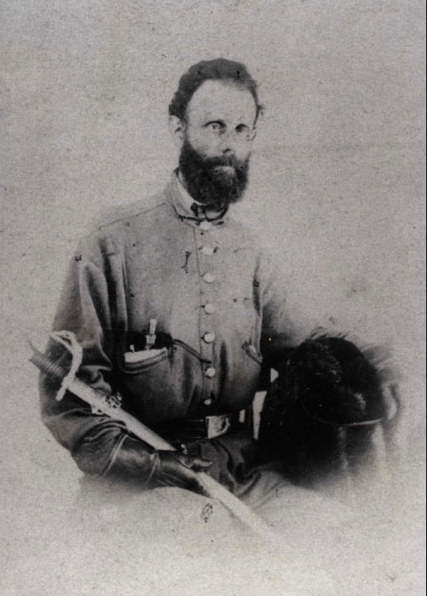
That afternoon Lt. Col. John Augustine Washington III, Lee's aide and a great-grandnephew of George Washington, rode out with Lee's son, Capt. W. H. F. "Rooney" Lee, and two cavalrymen to scout the Union right on the Elkwater Fork. Three pickets of the 17th Indiana fired on them from cover. Three bullets struck Washington in the chest. Rooney Lee escaped, and Washington died while Union soldiers were carrying him toward their camp.31617 Washington had been the last of his family to own Mount Vernon, which he sold to the Mount Vernon Ladies' Association for $200,000.18

That night Rust wrote to Loring from Camp Bartow. His report began: "The expedition against Cheat Mountain failed."2
September 14: Lee orders the withdrawal
Confederate troops moved again toward Elkwater, and a rifled gun of Loomis' battery drove them back. Lee sent a flag of truce asking for Washington's body and met a Union party already bringing it in.23 The same day he issued orders announcing that the "forced reconnaissance" was complete and that the Army of the Northwest would return to its former positions.2 In the afternoon the Confederates pulled back from Elkwater.2
September 15 and after: the last push
On the 15th the Confederates appeared in front of the fort in greater strength than at any time before and tried to turn its left. The garrison drove them off.2 Lee's columns were back at Valley Mountain by September 17. A Tennessee soldier put it this way: "at the end of seven days' marching and starvation, we got back to Valley Mountain."31
On September 17 Lee wrote privately to Gov. John Letcher of Virginia. "But for the rain-storm, I have no doubt it would have succeeded," he wrote of the plan. "This, Governor, is for your own eye. Please do not speak of it; we must try again."3
Counting the cost
The Union lost 88 men: 10 killed, 14 wounded and 64 captured.41 Reynolds' first report, written September 17, counted 9 killed, 2 missing and about 60 taken prisoner, most of them men cut off by Anderson's column.2 Confederate losses are usually given as about 120. That number is Reynolds' own claim of nearly 100 Confederates killed and about 20 captured.12
Union soldiers who died at the fort were buried near it, and their graves are still visible.13 Surface mining in the 20th century destroyed part of the graveyard.6
Aftermath
Both armies ended the battle about where they had started.1 Freeman, Lee's biographer, judged that "Rust's conduct on the 12th had been inexcusable." He faulted Lee as well, for waiting on Loring at Huntersville and for trusting the decisive attack to a colonel who had never been in action. "His first campaign had ended ingloriously," Freeman concluded.3
The fighting moved east along the turnpike. On the night of October 2, Reynolds marched about 5,000 men off the mountain against Jackson's camp at Camp Bartow on the Greenbrier River. After a day of artillery fire and a failed flanking attempt he returned to Cheat Mountain, having lost 8 killed and 32 wounded.1920 On December 13 Milroy attacked Col. Edward Johnson's Confederates at Camp Allegheny, a few miles farther east, and withdrew after a day of fighting that settled nothing.21
Lee moved south to Sewell Mountain in late September, called off the offensive he planned there for want of supplies and good weather, and was recalled to Richmond at the end of October.13
The garrison left Cheat Summit Fort in April 1862.6 An Indiana volunteer wrote that "the fourteenth took what I fondly hope is their last look at Cheat Mountain."6
“With what a light step all started.”
An Indiana volunteer, leaving Cheat Summit, April 1862
The site today
The Forest Service bought the fort site in 1987, and it was listed on the National Register of Historic Places in 1990.6 It lies in the Monongahela National Forest. The earthworks still stand up to 10 feet high.12 To get there, take County Route 43/4 off U.S. 250 near Cheat Bridge; the Forest Service opens its Civil War sites when they are free of snow.522 The Camp Allegheny battlefield is a short drive east on U.S. 250.21
A stone placed by the Randolph County chapter of the United Daughters of the Confederacy marks the spot where Washington was killed.23 A West Virginia state highway marker, put up in 1972, stands on U.S. 219 at Elkwater.17
How it is remembered
Lee's biographers treat Cheat Mountain as the first and least happy chapter of his war; Freeman gives it about twenty pages. Regional historians, notably Jack Zinn (1974) and W. Hunter Lesser (2004), study the 1861 campaign for its own sake. Bierce gave the mountain a literary afterlife. The reports the officers wrote that week, Rust's admission of failure, Kimball's account of his 300 and Reynolds' tally, remain the closest view of it.
Read the original records
- The Union and Confederate reports and Lee's orders, Official Records vol. 5, transcribed by West Virginia Archives and History
- Official Records, vol. 5, U.S. Congressional Serial Set (GovInfo)
- Freeman, R. E. Lee, vol. 1, ch. 33, the Cheat Mountain campaign
- Ambrose Bierce, "On a Mountain"
- American Battlefield Trust, Cheat Summit Fort
Further reading
- Jack Zinn, R. E. Lee's Cheat Mountain Campaign (McClain Printing, 1974).
- W. Hunter Lesser, Rebels at the Gate: Lee and McClellan on the Front Line of a Nation Divided (Sourcebooks, 2004).
- Clayton R. Newell, Lee vs. McClellan: The First Campaign (Regnery, 1996).
- Douglas Southall Freeman, R. E. Lee: A Biography, vol. 1 (Scribner, 1934), pp. 554 to 575.
- U.S. War Department, The War of the Rebellion: Official Records, ser. 1, vol. 5, pp. 184 to 193.
Sources
- American Battlefield Trust, "Cheat Mountain" battle page
- U.S. War Department, The War of the Rebellion: Official Records, ser. 1, vol. 5, pp. 184 to 193: reports of Reynolds, Kimball, Higgins, Rust and others, and Lee's orders of Sept. 9 and 14, 1861. Transcription by West Virginia Archives and History
- Douglas Southall Freeman, R. E. Lee: A Biography, vol. 1 (Scribner, 1934), ch. 33, "The Cheat Mountain Campaign," with Lee's letters to Gov. John Letcher (Sept. 17, 1861) and Louisa Washington. Public domain text, LacusCurtius
- W. Hunter Lesser, Rebels at the Gate: Lee and McClellan on the Front Line of a Nation Divided (Sourcebooks, 2004), p. 203
- American Battlefield Trust, "Cheat Summit Fort"
- USDA Forest Service, "Cheat Summit Fort" visitor brochure (PDF, hosted by MH3WV)
- Wikipedia, "Western Virginia campaign" (CC BY-SA)
- Wikipedia, "Battle of Philippi (1861)" (CC BY-SA)
- Wikipedia, "Battle of Rich Mountain" (CC BY-SA)
- Wikipedia, "Robert S. Garnett" (CC BY-SA)
- e-WV: The West Virginia Encyclopedia, "Battle of Cheat Mountain" (R. F. Hendricks)
- USDA Forest Service, Monongahela National Forest, archaeology activity book (PDF)
- e-WV: The West Virginia Encyclopedia, "Cheat Mountain"
- Richmond Daily Dispatch, Sept. 18 and 20, 1861, correspondents' letters on the Cheat Mountain expedition. Transcription by West Virginia Archives and History
- Ambrose Bierce, "On a Mountain", Collected Works vol. 1 (1909), Wikisource
- Evan Portman, "A Confederate Buried at Mount Vernon?" Emerging Civil War, June 14, 2024
- West Virginia state highway marker "Col. J. A. Washington," Elkwater, U.S. 219 (Historical Marker Database)
- George Washington's Mount Vernon, Digital Encyclopedia, "John Augustine Washington III" (Matthew Costello)
- Official Records, ser. 1, vol. 5, pp. 220 to 236: reports on the Greenbrier River engagement, Oct. 3, 1861. Transcription by West Virginia Archives and History
- American Battlefield Trust, "Greenbrier River" battle page
- American Battlefield Trust, "Camp Allegheny" battle page
- USDA Forest Service, Monongahela National Forest, recreation
- Wikipedia, "John Augustine Washington III" (CC BY-SA)
Published 2026-10-29. Corrections: see About.